Architectural vs. Designer Shingles: Which Premium Asphalt Option Fits Your Home?
If you have already decided on an asphalt roof, the next choice is often between architectural shingles and designer shingles. Both offer an upgrade over basic three-tab shingles, but they differ in appearance, construction, cost, and the premium features available.
Architectural shingles—also called dimensional shingles—are a popular choice for homeowners who want a textured roof with dependable performance at a moderate price. Designer shingles, sometimes called luxury shingles, are generally designed to create a more distinctive, high-end appearance and may imitate the look of slate or other premium roofing materials.
The right option depends on your budget, your home's architecture, local weather conditions, and the warranty coverage offered by the specific product. Here's how to compare them before requesting a roofing estimate.
What Are Architectural Shingles?
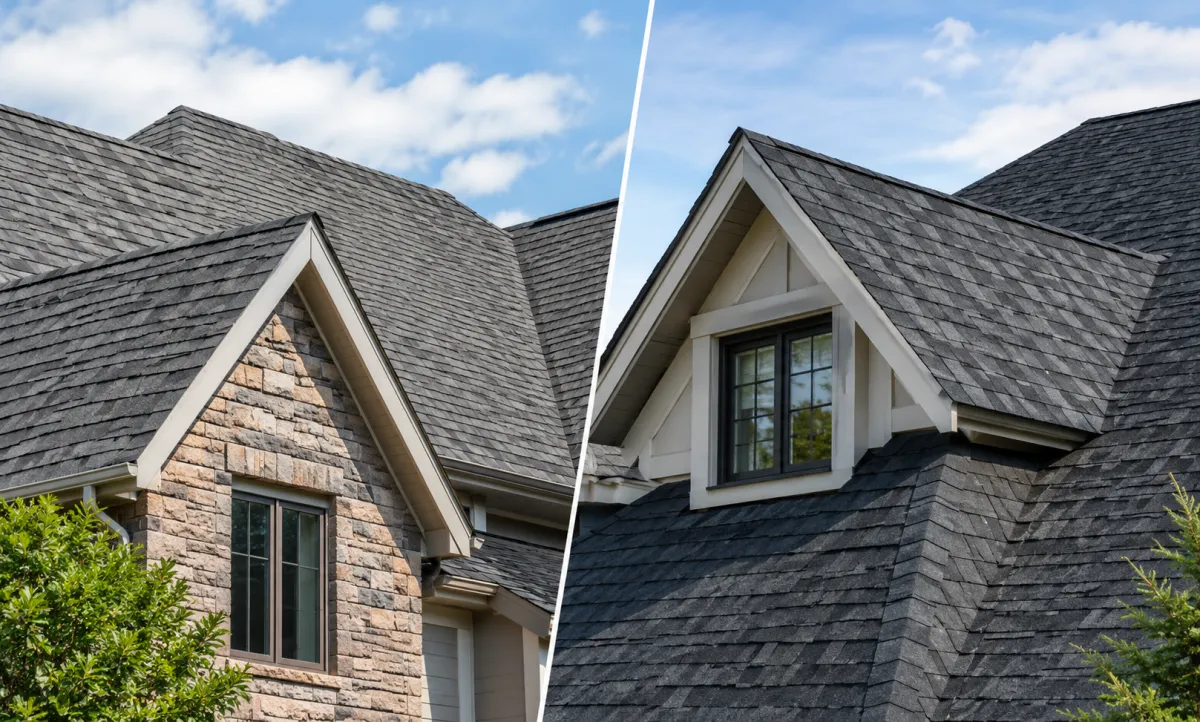
Architectural shingles are laminated asphalt shingles made with multiple layers of material. Those layers create a dimensional appearance, with varied shapes and shadow lines that give a roof more depth than traditional three-tab shingles.
They are often a practical middle ground for homeowners who want attractive, durable roofing without paying for the most expensive asphalt products.
Key Features of Architectural Shingles
Dimensional appearance: Layered construction creates texture and visual depth.
Broad style selection: Available in a range of colors and blends to complement different home designs.
Competitive value: Typically cost less than designer shingles while offering a premium look compared with basic three-tab products.
Multiple performance options: Wind ratings and warranty coverage vary by manufacturer, product line, and installation method.
Architectural shingles are a strong fit for homeowners who want to improve roof curb appeal while keeping the project within a defined budget.
What Are Designer Shingles?
Designer shingles are premium asphalt roofing products developed to deliver a more distinctive appearance. Depending on the product, they may feature deeper profiles, heavier construction, more elaborate color patterns, or designs inspired by natural slate and wood shakes.
These shingles are often selected for custom homes, high-end renovations, and properties where the roof is a prominent part of the exterior design.
Key Features of Designer Shingles
Distinctive roof profile: Many products offer pronounced shadow lines and more dramatic patterns.
Luxury-style finishes: Some are designed to reproduce the visual character of traditional slate or shake roofing.
Premium product options: Certain lines offer enhanced wind performance or upgraded warranty packages.
Higher upfront investment: Materials and installation may cost more, particularly for heavier or more complex products.
Not every designer shingle is automatically thicker, stronger, or better protected by a warranty than every architectural shingle. Compare the exact product specifications rather than relying on the category name alone.
Architectural Shingles vs Designer Shingles: Key Differences
The biggest difference is usually the balance between cost, appearance, and available product features. Architectural shingles focus on versatile value, while designer shingles prioritize distinctive styling and a more premium finish.
Feature | Architectural Shingles | Designer Shingles |
|---|---|---|
Appearance | Dimensional, textured look | More distinctive, often slate- or shake-inspired |
Construction | Laminated layers; weight varies by product | Often more elaborate profiles; construction varies |
Thickness and weight | Generally heavier than basic three-tab shingles | May be heavier than architectural options, but check specifications |
Wind rating | Varies by product and installation | Some products offer higher ratings; verify the tested rating |
Warranty tiers | Multiple limited-warranty options | May include premium warranty options, depending on the manufacturer |
Color and style | Broad selection of popular colors | Often includes specialized patterns and luxury-style finishes |
Material cost | Usually lower | Usually higher |
Best suited for | Homeowners seeking a balance of value and appearance | Homeowners prioritizing distinctive design and premium curb appeal |
Important: Wind ratings, impact classifications, warranty terms, and installation requirements are product-specific. Ask your roofer to compare the manufacturer data sheets for the exact shingles being quoted.
1. Appearance and Roof Curb Appeal
A roof can account for a substantial portion of a home's visible exterior, so shingle style can influence the overall impression of the property.
Architectural shingles provide depth and texture without making the roof the dominant design feature. They work well with many traditional, contemporary, and suburban home styles.
Designer shingles offer a more pronounced visual statement. Depending on the design, they can complement steep rooflines, custom architecture, stone facades, and homes where a slate-inspired or shake-inspired appearance is desirable.
Which Style Looks Better on Your Home?
Consider the roof's visibility from the street, the pitch and complexity of its slopes, the exterior siding, and the home's trim and masonry colors. A complex designer pattern may look impressive on a large roof but visually busy on a smaller home.
Before choosing, request physical samples or manufacturer color boards. If possible, review them outdoors in daylight, since roofing colors can appear different under indoor lighting.
2. Thickness, Weight, and Construction
Homeowners often assume that designer shingles are always thicker than architectural shingles. That is not a reliable rule for every product.
Architectural shingles use laminated construction to create a dimensional profile. Designer products may use heavier layers or more elaborate shapes, but construction and weight differ between manufacturers and product families.
Why Roof Weight Matters
Before upgrading to a heavier shingle, confirm that the existing roof structure is suitable for the proposed roofing system. Your contractor should also evaluate the condition of the roof deck, ventilation, flashing, and other components as part of the project.
Ask for the following details when comparing quotes:
Shingle weight per roofing square, where provided.
Product construction and profile.
Applicable installation instructions.
Any structural considerations associated with the selected product.
A heavier product is not automatically the best-performing option. Proper installation, suitable underlayment, ventilation, and attention to roof details all contribute to the performance of the complete roofing system.
3. Wind Ratings and Weather Performance
Wind resistance matters in areas exposed to strong storms, gusts, or seasonal severe weather. Both architectural and designer shingles may offer strong wind performance, but the category alone does not determine the rating.
The rating depends on the exact shingle model, the test standard used, the installation pattern, and compliance with the manufacturer's requirements.
What Wind Rating Should You Look For?
Ask your roofing contractor for the manufacturer's published wind rating and any conditions attached to it. Check whether the specified rating requires particular fasteners, nailing patterns, starter shingles, ridge caps, or other compatible components.
Also consider the home's exposure. Roof edges, ridges, corners, and complex roof geometry may require particular attention during installation.
Do not choose a shingle based only on a headline wind-speed claim. Confirm the rating in the product documentation and ensure the installation will meet the relevant requirements and local building codes.
4. Shingle Warranty Tiers: What Should You Compare?
Warranty coverage is an important part of a premium roofing decision, but the word premium does not guarantee the same protection across brands.
Architectural and designer shingles may be available with different limited-warranty terms. Coverage can depend on the product, registration requirements, approved installation methods, qualifying accessories, and whether the roofing system is installed by a contractor who meets the manufacturer's requirements.
Review These Warranty Details
Coverage duration: Determine how long the stated coverage applies and whether it changes over time.
Wind coverage: Check any wind-speed limits, exclusions, and installation conditions.
Material defect coverage: Understand what the manufacturer covers and what it excludes.
Workmanship coverage: Confirm whether labor and installation-related issues are included, and by whom.
Transferability: Check whether coverage can transfer to a future homeowner.
System requirements: Determine whether additional approved roofing components are required for enhanced coverage.
Read the actual warranty document before making a decision. A longer advertised warranty period does not necessarily mean broader coverage, and workmanship protection may be separate from the shingle manufacturer's material warranty.
5. Cost: Are Designer Shingles Worth the Upgrade?
Architectural shingles are generally the more budget-friendly option, while designer shingles usually require a higher upfront investment. The price difference depends on the product line, roof size and complexity, location, labor, removal of existing roofing, and the accessories required.
Rather than comparing material prices alone, request a complete installed estimate for each option.
Compare Total Project Value
A useful estimate should identify:
Shingle manufacturer, product name, and color.
Material quantities and installation labor.
Removal and disposal of existing roofing, if applicable.
Underlayment, flashing, starter shingles, ridge caps, and ventilation work.
Permit costs and any necessary repairs.
Warranty coverage and exclusions.
Designer shingles may be worth the additional cost if their appearance is a major priority and the upgrade fits your long-term plans. If you prefer a classic dimensional look and want to control costs, architectural shingles may deliver the better overall value.
Avoid assuming that a more expensive shingle will automatically increase resale value by a specific amount. The result depends on the local housing market, the home's condition, and buyer preferences.
6. Which Premium Asphalt Shingles Are Right for You?
The right choice depends on what you value most in your roofing project.
Choose Architectural Shingles If…
You want a dimensional roof without the highest material cost.
You prefer a versatile style that works with many home designs.
You want a broad selection of colors and product specifications.
You are balancing appearance, performance, and project budget.
Choose Designer Shingles If…
You want a more distinctive, high-end roof profile.
Your home's architecture benefits from slate-inspired or shake-inspired styling.
You are comfortable with a higher initial investment.
A particular designer product offers the appearance and documented features you want.
Whichever category you choose, compare individual products from reputable manufacturers. The specific model, installation quality, and warranty conditions matter more than the label alone.
7. Should You Consider Metal Roofing Instead?
If your priority is a different exterior style or a long-term alternative to asphalt, it may be worth comparing premium shingles with a metal roofing system before finalizing your project.
Metal roofing comes in several styles, including standing-seam panels and metal shingles. Its appearance, installation requirements, maintenance considerations, and overall project cost differ from asphalt roofing, so compare complete systems rather than material names alone.
metal roofing guide to learn about the available styles, benefits, and factors to consider when evaluating metal as an alternative to asphalt shingles.
Questions to Ask Before Requesting a Roofing Quote
Before you commit to either architectural or designer shingles, ask your contractor:
What are the exact manufacturer and product names being quoted?
How do the products compare in weight, construction, and appearance?
What published wind rating applies to each option, and what installation conditions are required?
What does each warranty cover, and what exclusions or registration rules apply?
Does the estimate include underlayment, flashing, ventilation, ridge caps, and other required components?
Are there any repairs or structural considerations that could affect the project?
Can you see physical samples and examples of completed roofs using these products?
Getting answers in writing makes it easier to compare bids fairly and reduces the chance of paying extra for a feature that does not meet your needs.
Final Verdict: Architectural or Designer Shingles?
Architectural shingles are often the practical choice for homeowners who want a textured, attractive roof with a balanced upfront cost. Designer shingles are better suited to projects where distinctive styling and a premium exterior finish justify the additional investment.
Neither option is automatically superior in every category. Compare the exact products for appearance, construction, wind rating, warranty terms, and installed price before deciding.
Ready to upgrade your roof? Get your content audited—if you're reviewing roofing content for your website—or, if you're a homeowner, request a detailed roofing estimate from a qualified local contractor. Ask for side-by-side product specifications and warranty documents so you can make a confident decision.
Frequently Asked Questions
Are architectural shingles the same as dimensional shingles?
Yes. Architectural shingles are commonly called dimensional shingles because their laminated construction creates a layered, textured appearance. Exact designs and performance features vary by product.
Are designer shingles better than architectural shingles?
Not in every respect. Designer shingles often offer more distinctive styling and may have premium performance or warranty options, but these features vary. Compare the specific products rather than assuming one category is always better.
Are designer shingles thicker than architectural shingles?
Some designer shingles are heavier or have more elaborate profiles, but thickness and weight are not standardized across all products. Check the manufacturer's specifications for the models you are considering.
Do designer shingles have better wind ratings?
Some designer products have high wind ratings, but architectural shingles can also offer strong wind performance. Confirm the exact rating, test standard, and installation requirements for each product.
Do premium asphalt shingles come with lifetime warranties?
Some products are marketed with limited lifetime warranties, but the meaning and conditions of that coverage vary. Review the full warranty document, including exclusions, coverage periods, and transferability.
Are luxury shingles worth the extra cost?
They can be worthwhile when their appearance is important to the homeowner and the price fits the budget. If a standard dimensional look meets your goals, architectural shingles may offer better value.
Can I install designer shingles over my existing roof?
Whether a roof-over is permitted depends on the existing roof's condition, local building codes, and the manufacturer's installation instructions. A qualified roofer should inspect the roof before recommending an approach.
How do I choose between architectural shingles and metal roofing?
Compare appearance, installed cost, expected maintenance, roof design, and product warranties. Metal roofing is a different roofing system with its own advantages and installation requirements, so evaluate a complete metal-roofing estimate alongside the asphalt options.