Class 4 Impact-Resistant Shingles: Are They Worth It for Michigan Homeowners?
Michigan homeowners know that severe weather can put a roof to the test. Hailstorms, strong winds, freezing temperatures, and seasonal storms can damage asphalt shingles and lead to expensive repairs. If you're planning a roof replacement, Class 4 impact-resistant shingles may offer an additional layer of protection.
But are they worth the extra cost?
For many homeowners, impact-resistant shingles can be a smart investment, especially in areas that experience recurring hailstorms or where insurance savings are available. However, the value depends on your home's location, roof condition, shingle type, installation costs, and insurance policy.
This guide explains how Class 4 shingles work, what they cost compared with standard shingles, how insurance discounts may apply, and how to decide whether they make sense for your Michigan home.
What Are Class 4 Impact-Resistant Shingles?
Class 4 impact-resistant shingles are asphalt roofing products tested for their ability to withstand impacts under a standardized testing procedure. They are designed to resist certain types of impact damage better than many conventional asphalt shingles.
The Class 4 rating is associated with the UL 2218 impact-resistance test, which evaluates how roofing materials respond to impacts from steel balls dropped under controlled conditions.
For homeowners, this rating provides a useful way to compare the impact resistance of different roofing products.
Understanding the UL 2218 Impact Rating System
UL 2218 classifies tested roofing materials into four impact-resistance classes. Class 1 represents the lowest rating, while Class 4 represents the highest.
Class 1: The lowest impact-resistance classification in the test.
Class 2: A higher level of impact resistance than Class 1.
Class 3: A higher level of impact resistance than Class 2.
Class 4: The highest classification under the UL 2218 test.
Class 4 shingles must withstand the test's specified impact conditions without showing the damage that would disqualify them under the applicable standard.
However, a Class 4 rating does not mean a roof is hailproof. Severe hail, unusual storm conditions, poor installation, and other factors can still cause damage.
Are All Class 4 Shingles the Same?
No. Roofing products with the same impact rating can differ in construction, flexibility, appearance, warranty coverage, and price.
Some impact-resistant asphalt shingles use SBS (styrene-butadiene-styrene) modified asphalt. This modification can improve flexibility and help the shingle absorb impacts, depending on the product's design.
When comparing products, ask your roofing contractor about:
The manufacturer's documented impact rating.
Whether the exact shingle product is classified as UL 2218 Class 4.
Warranty coverage and exclusions.
Wind-resistance ratings and installation requirements.
Compatibility with your existing roof design and ventilation system.
Choosing a product based on its documented performance and warranty is more useful than relying on marketing claims alone.
Benefits of Impact Resistant Shingles in Michigan
Michigan's weather can vary considerably by region and season. While not every home faces the same hail exposure, impact-resistant shingles can offer several advantages when selected and installed correctly.
Better Resistance to Certain Hail Impacts
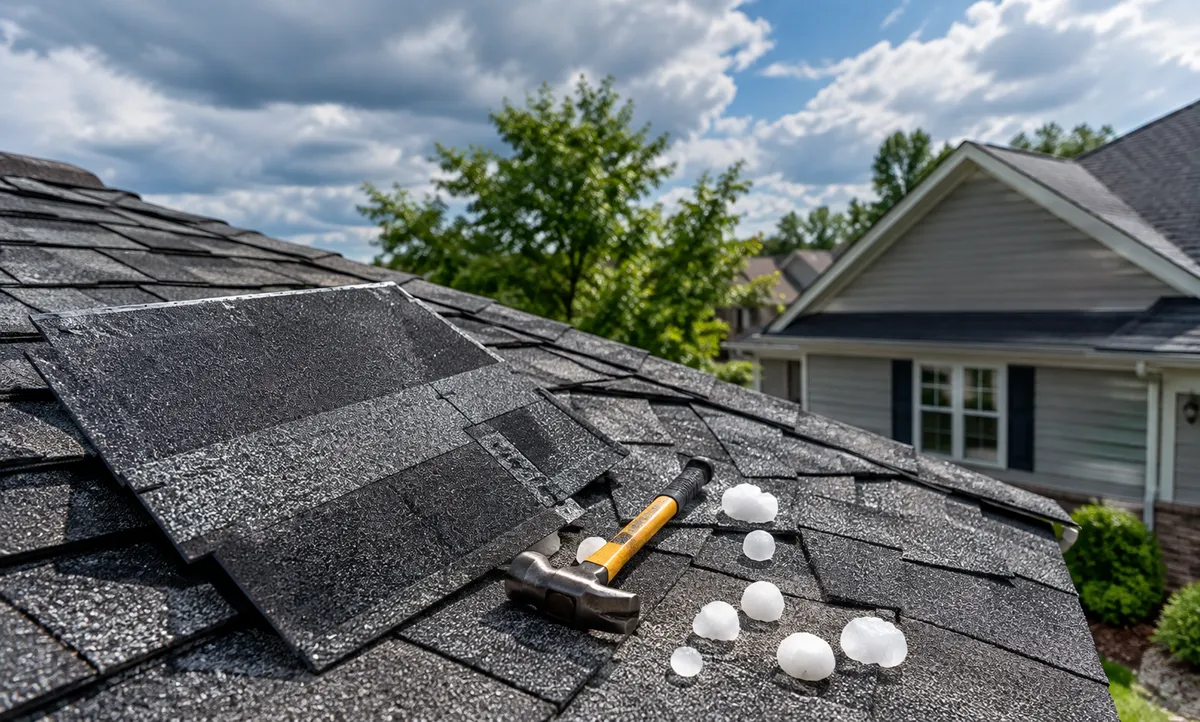
One of the main benefits of Class 4 shingles is their tested resistance to impact damage. Depending on the product and storm conditions, they may be less likely than conventional shingles to suffer certain types of impact-related damage.
This can be particularly valuable for homeowners who have experienced repeated hail damage or who want added protection during their next roof replacement.
Remember that hail size, wind direction, roof slope, installation quality, and the age of the roofing system all influence actual performance.
Potentially Fewer Hail-Related Repairs
Repeated storm damage can lead to repair bills, insurance claims, and the inconvenience of arranging roof inspections.
Impact-resistant shingles may reduce the likelihood of some forms of hail-related damage. Over time, avoiding even one significant repair could help offset part of the additional upfront cost.
However, savings are not guaranteed. Actual outcomes depend on local weather exposure, product performance, and the condition of the entire roofing system.
More Roofing Options for Long-Term Homeowners
If you intend to remain in your home for many years, upgrading to impact-resistant shingles during a planned roof replacement may make financial sense.
You can select a product designed to provide additional impact resistance without switching to a completely different roofing material.
Homeowners comparing asphalt shingles with metal roofing can also review our guide to metal roof installation in Michigan to compare material options, installation considerations, and long-term performance.
Possible Insurance Discounts
Some insurance companies offer premium discounts or other incentives for qualifying impact-resistant roofing materials. However, availability and savings vary by insurer, policy, location, and product eligibility.
A Class 4 rating alone does not guarantee a discount.
Before purchasing shingles, contact your insurance provider to ask whether it recognizes the exact roofing product and what documentation is required.
How Much More Do Class 4 Shingles Cost?
Class 4 impact-resistant shingles generally cost more than comparable standard asphalt shingles. The actual price difference depends on the manufacturer, product line, roof size, roof complexity, labor rates, and whether the existing roofing system needs to be removed.
There is no single additional cost that applies to every Michigan home.
Factors That Affect Installation Costs
Your total roof replacement estimate may depend on:
Roof size: Larger roofs generally require more materials and labor.
Roof complexity: Multiple slopes, valleys, dormers, and steep sections can increase installation costs.
Shingle selection: Different Class 4 products have different material prices.
Tear-off and disposal: Removing existing shingles may add to project costs.
Underlayment and flashing: Damaged or outdated components may need replacement.
Ventilation and decking: Improvements or repairs may be necessary to support a properly functioning roofing system.
For a fair comparison, request estimates for standard asphalt shingles and Class 4 shingles with the same scope of work. That makes the actual upgrade cost easier to identify.
Are the Extra Costs Worth the Investment?
The financial value depends on whether the additional upfront cost is offset by potential savings over the life of the roof.
Consider three main factors:
The additional installation cost of the Class 4 product.
Any verified insurance savings available to your household.
The potential value of reduced impact-related repairs.
For example, suppose the Class 4 upgrade costs an additional $2,000. If your insurer confirms a $200 annual premium reduction, the simple payback period from insurance savings alone would be 10 years.
This is only an illustrative calculation, not a typical Michigan price or guaranteed discount. It also excludes changes in premiums, the time value of money, maintenance, and any avoided repair costs.
If no discount is available, the decision depends more heavily on your hail exposure, expected time in the home, and how much you value additional impact resistance.
Can Class 4 Shingles Lower Homeowners Insurance in Michigan?
They may, but homeowners should confirm eligibility before committing to a more expensive roofing product.
Insurance companies establish their own eligibility requirements. Some may recognize qualifying impact-resistant roofing materials, while others may offer no discount or require specific documentation.
Questions to Ask Your Insurance Provider
Before choosing a product, ask your insurer:
Does my policy offer a discount for Class 4 impact-resistant shingles?
Which manufacturers and products qualify?
Is a UL 2218 Class 4 rating sufficient, or are additional certifications required?
What proof must I provide after installation?
Will the discount apply to my current policy, and how much could I save?
Are there any policy exclusions, deductibles, or claim conditions I should understand?
Ask for the discount amount and eligibility requirements in writing when possible.
What Documentation Might Be Required?
Depending on the insurer, you may need documentation such as:
A roofing contractor's paid invoice.
The manufacturer's product information.
Evidence of the product's impact rating.
Installation records or photographs.
A completed insurance inspection or certification form.
Confirm the requirements before installation so you can collect the correct documents.
Class 4 Shingles vs. Standard Asphalt Shingles
Both standard and impact-resistant asphalt shingles can be suitable roofing options. The right choice depends on your budget, weather exposure, and long-term plans.
Feature | Standard Asphalt Shingles | Class 4 Impact-Resistant Shingles |
|---|---|---|
Initial material cost | Often lower | Often higher |
Tested impact resistance | Depends on product rating | Meets the applicable Class 4 test requirements |
Hail damage protection | Varies by product | Designed for improved resistance to specified impacts |
Insurance discount | Depends on insurer | May qualify, subject to policy rules |
Appearance | Many colors and styles | Many colors and styles |
Maintenance needs | Depends on installation and conditions | Still requires regular inspections and maintenance |
Best suited for | Homeowners prioritizing upfront cost | Homeowners seeking added impact resistance |
Neither option is automatically the better investment for every property. Compare actual product specifications, warranties, and written installation estimates before making a decision.
Class 4 Shingles vs. SBS Modified Shingles
SBS modified shingles deserve special attention because the term describes a material modification rather than a separate impact-rating class.
SBS-modified asphalt incorporates a synthetic rubber-like polymer into the asphalt. Depending on the formulation, this can improve flexibility and help the material handle certain stresses.
Some SBS-modified shingles carry a Class 4 rating, but not every SBS-modified product is automatically Class 4.
When comparing products, verify the exact model's impact classification rather than assuming that SBS modification guarantees a particular rating.
Worth-It Checklist for Michigan Homeowners
Use this checklist to decide whether Class 4 impact-resistant shingles deserve a closer look for your next roof replacement.
Your home has experienced hail damage: Previous damage or recurring local hail exposure may make added impact resistance more attractive.
You plan to stay in your home for several years: A longer ownership period gives you more time to benefit from the upgrade.
Your insurer confirms a discount: A verified premium reduction can improve the financial case.
The price difference is reasonable: Compare written estimates with the same installation scope.
The product has a documented Class 4 rating: Confirm the exact model and applicable test standard.
The warranty meets your expectations: Review exclusions, maintenance requirements, and transferability.
Your roofing contractor understands the product: Correct installation and compliance with manufacturer instructions remain essential.
You have compared other roofing materials: Consider whether standard asphalt, Class 4 asphalt, or metal roofing best fits your property and budget.
If several of these points apply to your home, a Class 4 upgrade may be worth serious consideration. If hail exposure is low, the upgrade is expensive, and no insurance savings are available, standard asphalt shingles may offer better value.
How to Choose the Right Impact-Resistant Shingles
Selecting the right product involves more than choosing the highest rating.
Start by evaluating your roof's age, condition, slope, and exposure to severe weather. Then compare products from reputable manufacturers, checking their test documentation, warranty terms, and installation requirements.
A qualified roofing contractor can inspect the roof and explain whether any decking repairs, ventilation improvements, flashing replacements, or other work should be included in the project.
Ask for an itemized estimate that separates material costs from labor and related roofing work. This helps you compare the Class 4 upgrade against standard shingles without overlooking important installation expenses.
Finally, confirm insurance eligibility directly with your insurer before relying on a potential discount to justify the added cost.
Get Professional Advice on Class 4 Shingles in Michigan
For Michigan homeowners, Class 4 impact-resistant shingles can provide a useful combination of tested impact resistance, familiar asphalt-shingle styling, and the possibility of insurance savings.
They are most compelling when the additional cost fits your budget, hail exposure is a meaningful concern, and your insurer confirms that the selected product qualifies for a discount.
The best decision starts with an assessment of your roof and a clear comparison of your options.
Frequently Asked Questions
Are Class 4 impact-resistant shingles worth it in Michigan?
Class 4 impact-resistant shingles may be worth the extra cost for Michigan homeowners who want better resistance to certain hail impacts. Their value depends on local weather exposure, installation costs, potential insurance discounts, and how long you plan to stay in your home.
What does Class 4 mean for impact-resistant shingles?
Class 4 is the highest impact-resistance classification under the UL 2218 test standard. It indicates that a roofing product meets specific impact-test requirements, but it does not guarantee that the shingles will prevent all hail damage.
How much more do Class 4 shingles cost?
Class 4 shingles generally cost more than standard asphalt shingles. The price difference depends on the manufacturer, roof size, roof complexity, labor, and installation requirements. Request comparable estimates to determine the additional cost for your home.
Do Class 4 shingles qualify for homeowners insurance discounts in Michigan?
Some insurance companies may offer discounts for qualifying impact-resistant roofing materials. Eligibility and savings vary by insurer and policy, so contact your insurance provider to confirm whether your selected shingles qualify before purchasing them.
What is the difference between Class 4 shingles and SBS modified shingles?
Class 4 describes an impact-resistance rating, while SBS modified describes asphalt that incorporates a polymer to improve flexibility. Some SBS-modified shingles achieve a Class 4 rating, but homeowners should verify the rating of the exact product.
Are Class 4 shingles completely hailproof?
No. Class 4 shingles are designed to withstand specified impacts during standardized testing, but severe hail and other storm conditions can still damage roofing materials. Proper installation and regular roof inspections remain important.
How long do Class 4 impact-resistant shingles last?
Their lifespan depends on the specific product, installation quality, ventilation, maintenance, and weather exposure. Check the manufacturer's warranty and expected service-life guidance rather than assuming every Class 4 shingle lasts the same amount of time.
Should I choose Class 4 shingles or a metal roof in Michigan?
Class 4 asphalt shingles may be a good option if you want conventional shingle styling with additional impact resistance. Metal roofing offers different durability, maintenance, appearance, and cost considerations. Compare product warranties, installation estimates, and your long-term goals before deciding.