Insurance Claims for Storm & Hail Damage Roof Replacement in Oakland County
A severe Michigan storm can leave your roof with missing shingles, bruised roofing materials, damaged flashing, leaks, or other problems that are not always easy to see from the ground. If your Oakland County home has recently been hit by hail or high winds, understanding the Roof Insurance Claim Hail Damage Michigan process can help you document the damage and take the right next steps.
Homeowners insurance may cover certain storm and hail damage, but coverage depends on the specific policy and the circumstances of the loss. Michigan's Department of Insurance and Financial Services (DIFS) notes that insurance companies provide benefits only for covered losses and that a policy may cover the damaged portion of a roof rather than automatically requiring replacement of the entire roof.
A professional roofing contractor can inspect the roof, document visible damage, prepare a detailed repair or replacement estimate, and help you understand the roofing side of the claim. Your insurance company ultimately determines coverage under your policy.
What Is a Roof Insurance Claim for Hail Damage in Michigan?
A roof insurance claim is a request to your homeowners insurance company for benefits related to covered damage to your property.
For Oakland County homeowners, common storm-related roof problems can include:
Hail-damaged shingles
Wind-lifted or missing shingles
Damaged flashing
Roof punctures
Damaged vents
Exposed roofing materials
Water intrusion caused by storm damage
Damage to gutters, siding, or other exterior components
Not every roof problem is automatically covered. Your policy, deductible, exclusions, age and condition of the roof, cause of damage, and other policy terms can affect the claim.
Michigan DIFS recommends reviewing your policy and contacting your insurance company or agent after a loss to determine what coverage may be available.
Does Homeowners Insurance Cover Hail Damage to a Roof?
Many homeowners policies cover certain hail and wind damage, but coverage varies by policy.
Michigan DIFS specifically states that most homeowners insurance policies cover many types of wind and hail damage, but homeowners should review their individual policy to determine what is covered.
Your insurer may consider factors such as:
The cause of the damage
Whether the loss is covered under your policy
Your deductible
The age and condition of the roof
The extent of the storm damage
Applicable exclusions or limitations
Whether the damage resulted from a covered event
Do not assume that a hailstorm automatically means your insurance company will pay for an entire roof replacement.
How to Tell If Your Roof Has Hail Damage
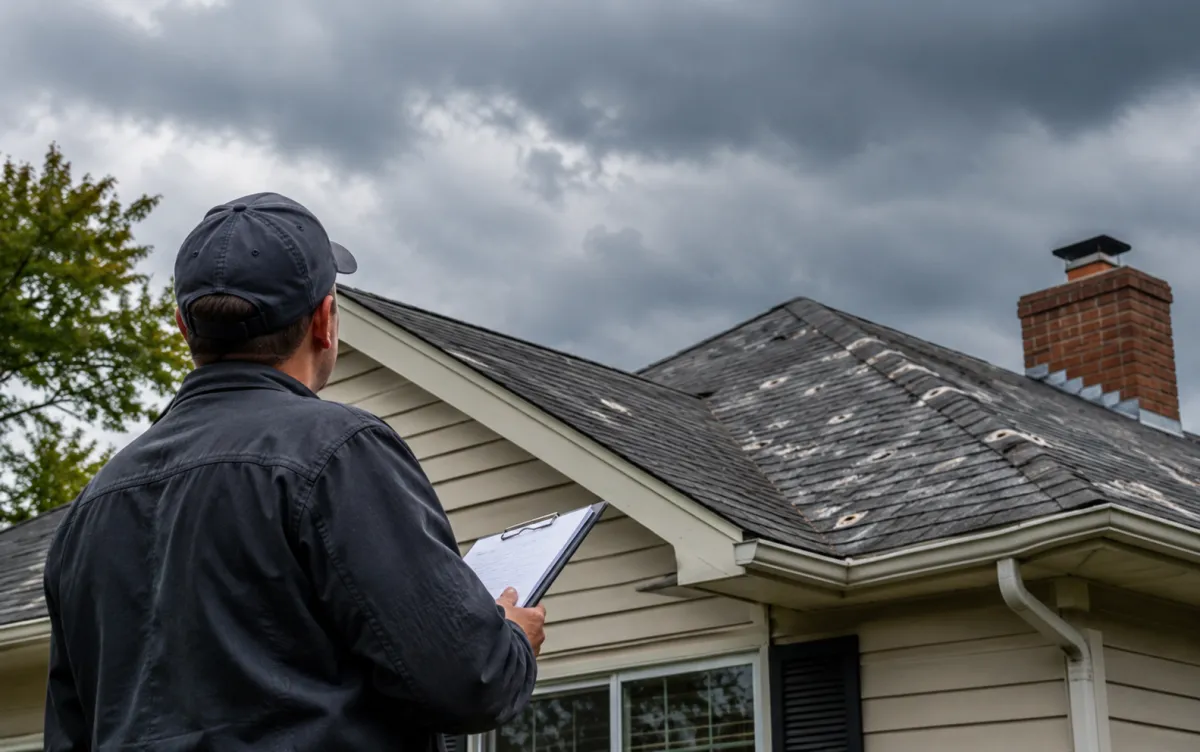
Hail damage is not always obvious from the ground. A professional roof inspection can identify damage that homeowners may overlook.
Common Signs of Hail Damage
Look for:
Round or irregular impact marks
Bruised or damaged shingles
Missing granules
Exposed areas of the shingle surface
Cracked or damaged shingles
Damaged metal flashing
Dented vents or other roof components
Damage to gutters and downspouts
Damage to siding, windowsills, or exterior surfaces
You may also find loose roofing materials around the property after a severe storm.
However, do not climb onto the roof yourself to inspect it if doing so creates a fall risk. A professional inspection is a safer way to evaluate hard-to-see areas.
Why a Professional Roof Inspection Matters for an Insurance Claim
A professional inspection can help establish what damage is present and whether the roofing materials show signs consistent with a recent storm event.
A roofing contractor may document:
Roof slope and roofing material
Missing or damaged shingles
Hail impact marks
Wind damage
Flashing damage
Vent damage
Gutter damage
Areas of possible water intrusion
Photographs of damaged areas
Measurements needed for an estimate
A detailed inspection report and photographs can give you useful documentation when discussing the loss with your insurer.
Keep in mind that a contractor's inspection does not determine whether your insurance policy covers the damage. Coverage decisions are made by the insurer according to the policy.
Step-by-Step Roof Insurance Claim Checklist
If you suspect storm or hail damage, use this checklist to organize the process.
Step 1: Make Sure Everyone Is Safe
Do not climb onto a damaged roof or enter unsafe areas just to inspect the property.
If the storm created an immediate hazard, address safety concerns first.
Step 2: Look for Visible Damage
From a safe location, look for:
Missing shingles
Shingle debris
Dented gutters
Damaged siding
Broken exterior components
Water stains or active leaks
Do not attempt a detailed roof inspection yourself if the roof cannot be safely accessed.
Step 3: Take Photos and Videos
Document the property as soon as it is safe.
Take photographs of:
The roof from ground level
Visible shingle damage
Gutters and downspouts
Siding
Windows
Interior water damage
Damaged personal property
Storm debris
Michigan DIFS recommends documenting losses with photographs or videos and keeping damaged items until the insurance company instructs you otherwise.
Step 4: Prevent Further Damage
Take reasonable steps to protect the property from additional damage when it is safe to do so.
For example, temporary measures may include covering an opening or arranging emergency mitigation for an active leak.
Keep receipts for reasonable expenses related to protecting the property because your insurer may request documentation.
Avoid making permanent repairs before the damage has been properly documented and your insurer has had an opportunity to inspect it, unless emergency circumstances require immediate action.
Step 5: Review Your Insurance Policy
Check your policy or contact your insurance agent to understand:
Storm and hail coverage
Roof coverage
Deductible
Exclusions
Claim reporting requirements
Proof-of-loss requirements
Any applicable limitations
Coverage differs between policies, so avoid relying on another homeowner's insurance experience.
Step 6: Report the Claim
Contact your insurance company or agent and report the storm damage.
Have your:
Policy number
Property address
Approximate storm date
Description of visible damage
Photos and videos
Contractor inspection information, if available
Michigan DIFS recommends contacting your insurance company or agent promptly after a loss.
Step 7: Schedule a Professional Roof Inspection
Have a qualified roofing contractor inspect the roof.
Ask for documentation showing:
Areas of damage
Type of damage
Photographs
Roof measurements
Recommended repairs or replacement
Estimated scope of work
Step 8: Meet With the Insurance Adjuster
Your insurance company may send an adjuster to inspect the property.
The adjuster evaluates the loss and determines what amount may be payable under the policy. Michigan recognizes company adjusters, independent adjusters, and public adjusters, with different roles and licensing requirements.
Be prepared to provide your photographs, inspection information, receipts, and other requested documentation.
Step 9: Review the Claim Estimate
Compare the insurer's scope of damage with the documented condition of your roof.
If you believe something was missed, ask your insurer how to submit additional documentation or request a reinspection.
Step 10: Move Forward With Approved Repairs
Once the claim and repair scope are sufficiently resolved, you can work with your chosen roofing contractor to complete the necessary work.
Michigan DIFS states that homeowners have the right to choose their own contractor even if the insurance company recommends contractors.
Storm Damage Roof Replacement vs. Roof Repair
Not every storm-damaged roof requires a complete replacement.
The appropriate solution depends on factors such as:
Situation | Possible Roofing Solution |
|---|---|
Small isolated damage | Repair |
Limited wind-damaged shingles | Shingle replacement/repair |
Multiple areas of hail damage | Repair or replacement depending on extent |
Widespread storm damage | Possible roof replacement |
Active water intrusion | Emergency mitigation plus repair |
Severe structural damage | Professional evaluation and appropriate reconstruction |
Michigan DIFS specifically warns homeowners that an insurer is not automatically required to replace an entire roof simply because some portions were damaged by a covered hail or wind event.
The final scope depends on the policy, damage, applicable requirements, and the insurer's claim determination.
How a Roofing Contractor Can Help With an Insurance Claim
A roofing contractor can be particularly useful when you are unsure how extensive the storm damage is.
A qualified contractor can help with the roofing portion of the process by:
Inspecting the roof
Photographing damage
Identifying visible storm-related damage
Measuring the roof
Preparing a repair or replacement estimate
Explaining roofing terminology
Providing documentation requested by the insurer
Coordinating the roofing work after the claim is resolved
A contractor should not misrepresent damage or promise that an insurance company will approve a claim.
If you need help from someone who actually represents you in adjusting an insurance claim, understand the distinction between a roofing contractor and a licensed public adjuster. Michigan DIFS states that public adjusters represent policyholders and must be licensed.
Can You Choose Your Own Roofing Contractor?
Yes. Michigan DIFS states that homeowners can choose their own contractor even when an insurance company recommends contractors.
Before hiring a contractor, verify:
Business information
References
Insurance coverage
Written contract
Scope of work
Payment terms
Warranty information
Communication expectations
Michigan DIFS also warns homeowners to watch for storm-repair scams, including high-pressure sales tactics, unsolicited door-to-door offers, and contractors demanding full payment upfront.
What Not to Do After Hail or Storm Damage
Avoid these common mistakes.
Don't Ignore Small-Looking Damage
Hail damage may not always be obvious from ground level. Have the roof professionally inspected if you suspect a storm caused damage.
Don't Make Permanent Repairs Too Quickly
Document the damage and communicate with your insurer before making permanent repairs when possible. Emergency measures to prevent additional damage may still be necessary.
Don't Sign Under Pressure
Do not sign a contract simply because someone arrives at your door immediately after a storm.
Take time to understand the agreement.
Don't Assume the Insurance Company Will Replace Everything
Coverage is based on your policy and the documented loss. Michigan DIFS specifically notes that hail and wind damage does not automatically mean the entire roof must be replaced.
Don't Give Anyone Your Insurance Check Without Understanding the Agreement
Understand exactly what you are signing and how payments will be handled.
Don't Hire an Unverified Contractor
Check credentials, references, insurance, and written contract terms before proceeding. Michigan DIFS recommends checking service-provider credentials following severe weather.
What If Your Insurance Claim Is Denied?
A denied claim does not necessarily mean the conversation has to end.
First, review the explanation from your insurer and ask questions about the decision.
You can:
Ask the insurance company why the claim was denied.
Review the relevant policy language.
Provide additional photographs or documentation if appropriate.
Ask whether a reinspection is available.
Discuss the issue with your insurance agent or claims representative.
Contact Michigan DIFS if you believe the claim has not been handled properly.
Michigan DIFS recommends first attempting to resolve concerns directly with the insurance company. If you cannot reach a resolution, DIFS provides a complaint process for consumers.
How Long Does a Michigan Roof Insurance Claim Take?
There is no single timeline that applies to every storm-damage roof claim.
The process can depend on:
Severity of the storm
Number of claims after the event
Availability of adjusters
Complexity of the damage
Documentation provided
Policy requirements
Whether additional inspection is necessary
Whether the claim is disputed
Michigan DIFS states that an insurer has no fixed time limit to complete its investigation, although homeowners can contact DIFS if they believe the investigation is taking an unreasonable amount of time.
Michigan consumer guidance also explains specific requirements concerning information requested from policyholders and claim payments once the insurer has received the required proof of loss.
Oakland County Storm & Hail Damage Roof Replacement
Oakland County homeowners can experience severe weather that damages roofing materials, siding, gutters, windows, and other exterior components.
Whether you live in:
Rochester Hills
Rochester
Troy
Birmingham
Bloomfield Hills
Auburn Hills
Pontiac
Farmington Hills
Novi
Royal Oak
Waterford
West Bloomfield
Clarkston
Lake Orion
Or another Oakland County community
the first priority after a major storm should be safety, documentation, and preventing additional damage.
A professional roof inspection can help identify whether your roof has visible storm or hail damage and provide documentation for your records.
When Should You Get a Roof Inspection After a Storm?
It's a good idea to arrange an inspection when:
Your neighborhood experienced significant hail
You see missing or damaged shingles
You notice granules around downspouts
Gutters show dents
You see new leaks
You notice ceiling or attic water stains
Nearby homes have confirmed storm damage
You suspect your roof was impacted but cannot safely inspect it yourself
A professional inspection can identify damage that is difficult to see from ground level.
Roof Insurance Claim Checklist for Homeowners
Save this checklist for your next storm.
Before Filing
Check your insurance policy
Confirm your deductible
Record the approximate storm date
Photograph visible exterior damage
Photograph interior water damage
Arrange a professional roof inspection
Keep receipts for emergency protection or mitigation
During the Claim
Report the claim to your insurer
Keep your claim number
Record the adjuster's contact information
Provide requested documentation
Keep copies of photographs and estimates
Attend or coordinate the roof inspection
Ask questions about anything you do not understand
Before Hiring a Contractor
Verify the contractor's business information
Check insurance coverage
Review references
Get a written scope of work
Understand payment terms
Review warranties
Avoid high-pressure contracts
Never assume approval is guaranteed
Frequently Asked Questions
Does homeowners insurance cover hail damage to a roof in Michigan?
Many homeowners insurance policies cover certain hail and wind damage, but coverage varies by policy. Review your policy and contact your insurer to determine whether your specific loss is covered.
Can hail damage require a complete roof replacement?
It can, depending on the extent of the damage and the applicable insurance policy. However, hail damage does not automatically mean an insurer must replace the entire roof. Michigan DIFS specifically notes that an insurer may only be responsible for the portion of the roof damaged by a covered loss.
Should I file an insurance claim before getting a roof inspection?
You can contact your insurance company or agent to report the loss and also arrange a professional roofing inspection. Documenting the condition of the roof can help you understand and communicate the extent of the damage.
Can I choose my own roofing contractor for an insurance claim?
Yes. Michigan DIFS states that homeowners have the right to choose their own contractor, even when an insurer recommends contractors.
What should I do if my roof is leaking after a storm?
Take reasonable steps to prevent additional damage if it is safe to do so, document the damage, keep receipts for emergency measures, and contact your insurance company or agent promptly.
Can a roofing contractor handle my insurance claim?
A roofing contractor can inspect the roof, document roofing damage, prepare estimates, and provide information related to the roofing work. However, homeowners should understand the difference between a contractor and a licensed public adjuster. A public adjuster represents the policyholder in adjusting the insurance claim and must be licensed in Michigan.
What if the insurance company denies my roof claim?
Ask the insurer for an explanation, review the applicable policy language, and provide additional documentation when appropriate. If you cannot resolve the issue directly with the insurer, Michigan DIFS provides consumer assistance and a complaint process.
Do I need a public adjuster for a roof insurance claim?
No. You are not required to hire a public adjuster to file an insurance claim. If you decide to hire one, Michigan DIFS recommends verifying the adjuster's license.
How much is a roof insurance deductible?
Your deductible is determined by your insurance policy. Review your declarations page or contact your insurance company to confirm the applicable deductible for your claim.