10 Warning Signs You Need a Roof Replacement (Not Just a Repair)
Your roof does not always fail all at once. In many cases, it gives homeowners plenty of warning before a small problem becomes a major roofing project.
A missing shingle, small leak or damaged flashing may only require a repair. But when several warning signs appear together, continued repairs may no longer be the most practical solution.
Knowing the signs you need a new roof can help you make a more informed decision before calling a roofing professional.
Below are 10 warning signs to look for, followed by a simple roof inspection checklist you can use to organise what you find.
1. Your Roof Is Near or Past Its Expected Lifespan
One of the first questions to ask is: How old is my roof?
If you do not know, check your closing documents, previous roofing invoices, home inspection report or insurance records. A roofing professional may also be able to estimate the roof's age based on its condition and materials.
Asphalt shingle roofs can have different expected lifespans depending on the shingle type, installation quality, ventilation, weather exposure and maintenance.
Age alone does not automatically mean you need a replacement. However, an older roof combined with other problems deserves closer attention.
If your roof is approaching the end of its expected service life and you are already making repeated repairs, replacement may make more sense than continuing to patch individual problems.
2. Shingles Are Curling or Buckling
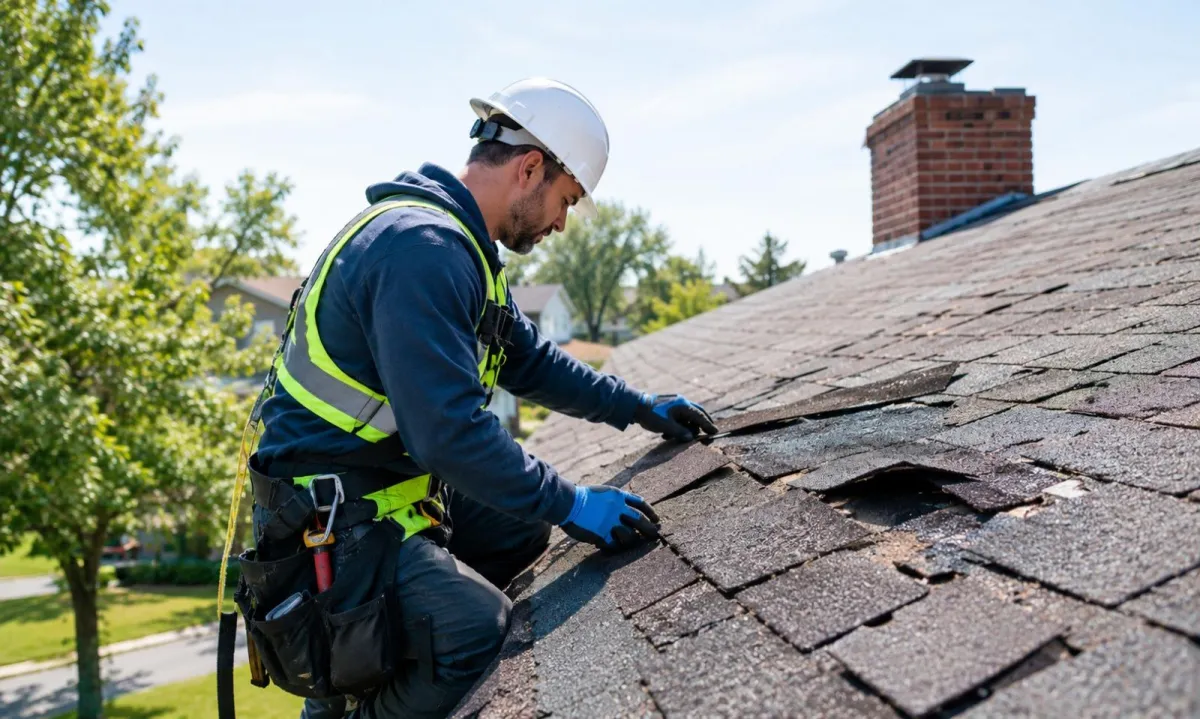
Curling shingles are one of the more visible roof replacement warning signs.
Look for shingles whose edges are curling upward or whose centres appear raised or distorted.
Curling can happen because of age, weather exposure, installation issues, poor ventilation or other factors.
A few damaged shingles may be repairable. But if curling or buckling appears across large sections of the roof, it may indicate that the roofing system is deteriorating more broadly.
Take a look from the ground rather than climbing onto the roof yourself. Roofing surfaces can be slippery and unsafe, particularly when damaged.
3. You Have Missing or Widespread Damaged Shingles
A few missing shingles after a severe storm may be replaced individually.
The situation is different when missing, cracked or damaged shingles are widespread.
Check visible roof sections for:
Missing shingles
Cracked shingles
Broken tabs
Loose shingles
Exposed underlayment
Large areas of weathered roofing
If damage is concentrated in one area, a repair may be possible. If the roof has widespread deterioration, however, replacement may be worth considering.
4. You Are Losing a Lot of Shingle Granules
Asphalt shingles are covered with protective granules. Over time, some granule loss is normal.
But significant granule loss can be a warning sign.
You may notice loose granules in gutters, downspouts or around the base of the house. You may also see shingles becoming visibly smoother or losing their original texture.
A small amount of granule loss does not automatically mean your roof needs replacement. However, substantial loss across an ageing roof can indicate that the shingles are approaching the end of their useful life.
This is especially important when granule loss appears alongside curling, cracking or other visible deterioration.
5. The Roof Is Sagging
A sagging roof is one of the warning signs that should not be ignored.
Look at the roofline from a safe location on the ground. Instead of appearing straight and consistent, does part of the roof appear to dip or bow?
Sagging can be associated with problems such as moisture damage, deteriorated roofing materials or structural issues.
Unlike a single damaged shingle, a sagging roof may involve more than the outer roofing layer.
If you notice significant sagging, arrange for a professional assessment rather than assuming that replacing a few shingles will solve the problem.
6. You Keep Finding Roof Leaks
A single roof leak does not necessarily mean you need a new roof.
Sometimes the cause is localised, such as damaged flashing, a failed seal, or a small area of damaged shingles.
The more important question is whether leaks are repeated, widespread, or becoming harder to isolate.
Roof Leak vs Replacement: What Should You Look For?
A repair may be appropriate when:
The roof is relatively young
Damage is limited to a small area
The underlying roofing system remains in good condition
The source of the leak can be identified and corrected
Replacement may deserve consideration when:
Multiple areas are leaking
Leaks keep returning after repairs
The roof is near the end of its lifespan
There is widespread shingle deterioration
Water damage extends beyond a small repair area
A professional inspection is the best way to determine whether a leak is an isolated problem or part of a larger roofing issue.
7. Your Roof Has Visible Wear Across Large Areas
Stand back and look at the roof as a whole.
Does it still look relatively uniform, or are large sections visibly worn, faded, cracked or deteriorated?
Individual imperfections are not always a reason for replacement. However, widespread wear can indicate that the roofing system is ageing.
This is why assessing the overall condition is often more useful than focusing on one damaged shingle.
8. You Notice Daylight or Signs of Moisture in the Attic
If you have safe access to your attic, look for obvious signs of moisture or roof problems.
Potential warning signs include:
Damp insulation
Water stains
Moisture marks on wood
Mould or mildew-like growth
Daylight visible through roof areas
Musty odours
Signs of previous water intrusion
Not every attic issue means the entire roof needs replacement. Ventilation, flashing, plumbing penetrations and other building components can also contribute to moisture.
Still, repeated moisture deserves professional attention.
9. Your Energy Bills Suddenly Increase
A sudden increase in heating or cooling costs can have many causes, so higher energy bills should not automatically be blamed on the roof.
However, roof condition and attic performance can affect how efficiently your home manages temperature.
Poor ventilation, inadequate insulation and air leakage can all contribute to uncomfortable indoor temperatures and increased energy use.
If rising energy costs occur alongside an ageing or visibly damaged roof, it may be worth having both the roofing system and attic ventilation inspected.
This is one reason homeowners should look beyond the shingles themselves when assessing overall roof performance.
10. You Are Making Frequent Roof Repairs
Repeated repairs can become a warning sign in their own right.
If you have repaired different sections of the roof several times over the past few years, consider the bigger picture.
Ask yourself:
How much have I spent on repairs?
How old is the roof?
Are new problems appearing in different areas?
Are leaks returning?
Are the shingles showing widespread deterioration?
Is another repair likely to solve the problem for the long term?
A repair can be the right choice for a healthy roof with a localised problem. But repeated repairs on an ageing roof may only postpone a replacement that will eventually be necessary.
Roof Inspection Checklist for Homeowners
Use this simple checklist when looking at your roof from safe areas around your property.
Exterior
Roof is approaching the end of its expected lifespan
Shingles are curling or buckling
Shingles are cracked or missing
Large areas look worn or weathered
Significant granule loss is visible
Roofline appears to sag
Flashing appears damaged or deteriorated
Gutters contain an unusual amount of shingle granules
Interior
Water stains are visible on ceilings or walls
Attic insulation appears damp
Moisture marks are visible on roof decking
There are signs of previous leaks
Daylight is visible through parts of the roof
The attic has unexplained moisture or odours
History
Roof age is unknown
Roof is relatively old
Multiple repairs have been made
Leaks have returned after previous repairs
Storm damage has occurred recently
The more boxes you check, the more useful a professional roof inspection may be.
Does Checking These Signs Mean You Need a New Roof?
Not necessarily.
This checklist is designed to help you identify potential warning signs, not diagnose your roof.
For example, one missing shingle does not automatically mean replacement. Likewise, an older roof can sometimes continue performing well if it has been properly maintained.
The decision should consider the roof's age, condition, extent of damage, repair history and the condition of the underlying roofing system.
A professional inspection can help determine whether repair, partial replacement or full roof replacement is the most appropriate option.
Repair or Replacement? Consider the Bigger Picture
When homeowners notice a roofing problem, the natural question is often:
"Can this just be repaired?"
Sometimes the answer is yes.
A localised issue on an otherwise healthy roof may be relatively straightforward to address. But when damage is widespread or the roof is nearing the end of its service life, repeatedly repairing individual areas may not provide the best long-term solution.
The right decision depends on the specific roof rather than a single warning sign.
If you are also concerned about how a storm or other covered event may affect your costs, it is useful to understand the insurance process before making major decisions. Review the relevant insurance claims guidance for more information.
Similarly, if cost is your main concern, checking common questions about roofing prices and estimates can help you understand what factors can affect the final price.
What to Do When You Notice Multiple Warning Signs
If you have noticed several of these roof replacement warning signs, do not wait until a major leak forces the decision.
Start by documenting what you can safely observe. Take photos from the ground, note when leaks occur and gather information about previous repairs.
Then arrange a professional roof inspection.
An inspection can help identify whether the problems are isolated or whether the roof is showing broader signs of deterioration.
Need Help Assessing Your Roof?
Rochester Hills Roofing provides professional roof inspections and estimates for homeowners who want to understand the condition of their roof and determine the appropriate next step.
Request a Free Roof Inspection →
Final Thoughts
Knowing the signs you need a new roof can help you avoid two common mistakes: replacing a roof that could have been repaired or continuing to repair a roof that is already nearing the end of its useful life.
Look for patterns rather than relying on one symptom.
Age, curling shingles, widespread damage, granule loss, sagging, recurring leaks, attic moisture and repeated repairs can all provide useful clues. Rising energy bills may also deserve attention when combined with other roof or attic concerns.
Most importantly, do not climb onto a damaged roof to perform your own inspection. Use the checklist as a visual guide from safe locations and let a qualified roofing professional assess areas that require closer examination.
Frequently Asked Questions
What are the main signs you need a new roof?
Common signs include an ageing roof, widespread curling or damaged shingles, significant granule loss, sagging, recurring leaks, extensive wear and repeated repairs. Multiple warning signs together are more concerning than a single isolated issue.
How do I know if my roof needs repair or replacement?
Consider the roof's age, extent of damage, overall condition, and repair history. A localised problem on an otherwise healthy roof may be repairable, while widespread deterioration or repeated problems may indicate that replacement is more appropriate.
Are curling shingles a sign that I need a new roof?
Curling shingles can be a warning sign of roof deterioration, especially when they are widespread or occur on an older roof. A professional inspection can determine whether individual shingles can be repaired or whether the roofing system needs replacement.
How old is my roof?
You may be able to find the installation date in your home purchase documents, previous roofing invoices, inspection reports or insurance records. If documentation is unavailable, a roofing professional may be able to estimate the roof's age from its materials and condition.
Does granule loss mean I need a roof replacement?
Not necessarily. Some granule loss is normal as shingles age. Significant or widespread granule loss, particularly when combined with other signs of deterioration, may indicate that the roof needs closer evaluation.
Can a roof leak mean I need a new roof?
A roof leak does not automatically mean replacement. A small, isolated leak may be repairable. Repeated leaks, multiple leaking areas or leaks on an ageing and deteriorated roof may indicate a larger problem.
Is a sagging roof always a sign of roof replacement?
A sagging roof can indicate a serious roofing or structural problem and should be professionally assessed. The appropriate solution depends on what is causing the sagging and the condition of the overall roofing system.
Can higher energy bills be caused by a roof?
Higher energy bills can have many causes. Roof and attic problems, including ventilation or insulation issues, can affect energy efficiency, but an increase in bills alone is not enough to determine that a roof needs replacement.