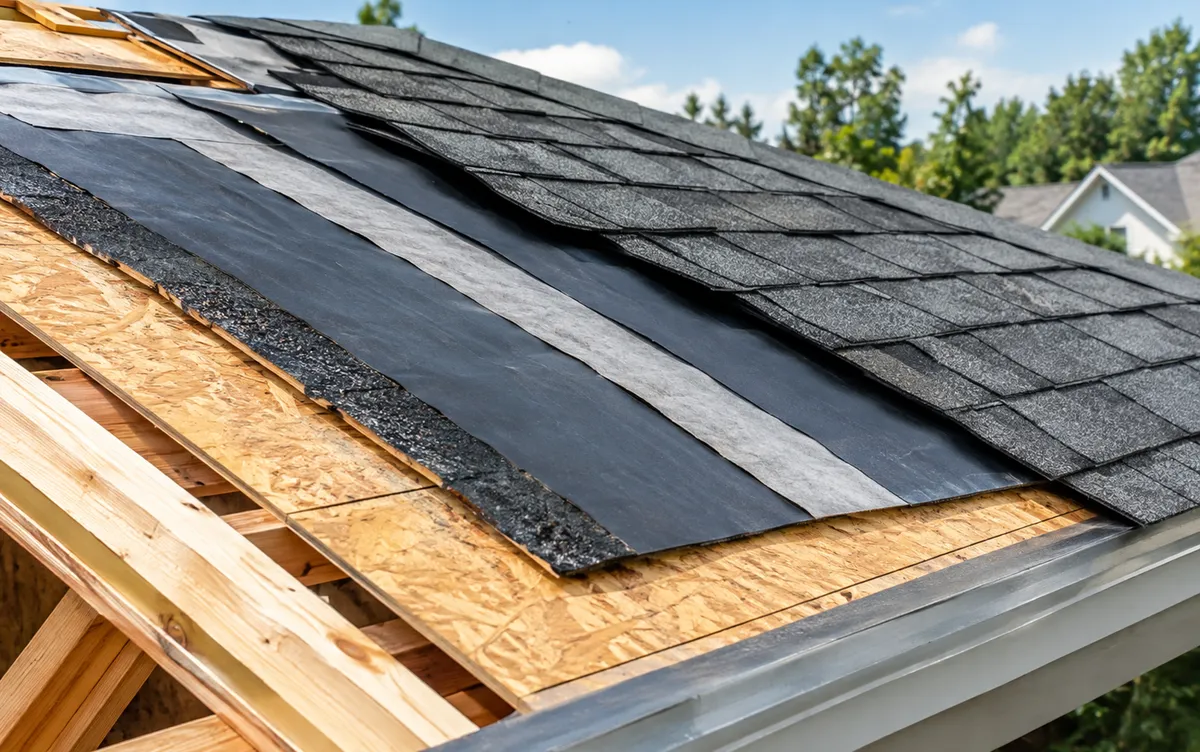
What Goes Under Your Shingles: The Complete Roof System Explained
A roof is more than the shingles you see from the ground. A properly installed roof is made up of multiple layers and components that work together to keep water out, protect the structure of your home, manage ventilation, and extend the life of the roofing system.
Understanding these roof system components can make it much easier to compare roofing estimates. Two contractors may quote similar prices while including very different materials, installation steps, or levels of protection.
When reviewing a roofing proposal, you should know what is being installed beneath the shingles, how the edges are protected, what happens around roof penetrations, and whether ventilation and flashing are included.
This guide walks through the major layers of a residential roof from the structural deck upward, explaining what each component does and why it matters.
Roof System Components at a Glance
A typical asphalt shingle roof can include several layers and supporting components:
Roof framing
Roof deck
Drip edge
Ice and water protection
Roofing underlayment
Valley protection and flashing
Starter strip
Asphalt shingles
Ridge and hip shingles or caps
Roof ventilation
Flashing around penetrations and wall intersections
Not every roof has exactly the same configuration. Roof design, climate, local building requirements, roofing material, and manufacturer specifications can affect which components are used and where they are installed.
The Roof Structure Starts With the Framing
Before looking at the visible roofing materials, it helps to understand what supports the roof.
The roof framing provides the structural framework that creates the roof's shape and supports the roof deck and roofing materials.
Depending on the home's construction, framing may consist of rafters, trusses, or other structural members.
The roofing contractor typically does not replace the entire framing system during a standard roof replacement. However, damaged or deteriorated framing may need to be repaired if it affects the roof's structural integrity.
Why Roof Framing Matters
The framing needs to provide a stable foundation for everything installed above it.
If structural problems are discovered during a roof replacement, they are a different issue from ordinary shingle replacement and may require additional work.
Roof Deck: The Foundation Beneath the Roofing
The roof deck is the structural surface installed over the roof framing.
Common residential roof decks include plywood or oriented strand board (OSB). The deck provides the surface to which the roofing system is attached.
When contractors remove old shingles, they can inspect the deck for signs of damage.
What Happens if the Roof Deck Is Damaged?
Water leaks can eventually cause wood deterioration. A roof deck may also have damage from long-term moisture exposure or other problems.
If damaged decking is discovered, sections may need to be replaced before the new roofing materials are installed.
This is one reason roofing estimates sometimes include a decking allowance rather than a completely fixed price for every square foot of the project.
What to Look for in a Roofing Bid
Ask whether the estimate includes:
Roof deck inspection
Removal of damaged decking
The contractor's price for replacement decking
Whether decking replacement is charged separately
The type and thickness of replacement decking
This can help prevent surprises when the old roof is removed.
Drip Edge Protects the Roof's Edges
The drip edge is a metal flashing component installed along roof edges to help direct water away from the roof deck and into the gutter system or away from vulnerable edge areas.
It may look like a relatively small part of the roof, but it plays an important role in managing water at the perimeter.
Where Is Drip Edge Installed?
Drip edge is commonly installed along:
Eaves
Rake edges
Other roof perimeter locations as required by the roofing system and applicable installation requirements
The exact installation method can vary depending on roof design and the surrounding components.
Why Drip Edge Matters
Without appropriate edge protection, water can reach vulnerable portions of the roof assembly.
When comparing roofing estimates, check whether drip edge is specifically included rather than assuming it is part of the shingle installation.
Ice and Water Protection Helps Defend Vulnerable Areas
Ice and water protection is a water-resistant membrane designed to provide additional protection in areas that are especially vulnerable to water intrusion.
It is commonly used around roof penetrations, valleys, eaves, and other locations depending on the roof design, climate, manufacturer requirements, and local building requirements.
In cold climates, this protection can be particularly important around eaves where ice dams can develop.
Ice and Water Protection vs. Standard Underlayment
These materials are not necessarily interchangeable.
Ice and water protection is designed to provide enhanced water resistance and typically uses an adhesive backing to create a more secure seal.
Standard roofing underlayment serves a broader role across the roof deck.
A roofing proposal should identify which materials are being used and where they will be installed.
Roofing Underlayment Creates Another Protective Layer
Roofing underlayment is installed over the roof deck beneath the shingles.
It acts as a secondary layer of protection against water that gets beneath the shingles.
Common types include:
Asphalt-saturated felt
Synthetic underlayment
Self-adhered membranes used in specific applications
The correct product depends on the roofing system and installation requirements.
Why Roofing Underlayment Mat
ters
Shingles are the primary exposed weathering layer, but they are not the only part of the roof responsible for water management.
Underlayment helps protect the roof deck if water gets underneath the shingles.
When reviewing a bid, look for the specific underlayment product rather than simply a generic statement such as "underlayment included."
Valleys Need Special Attention
Roof valleys are areas where two roof slopes meet.
Because water from both slopes can flow toward the valley, this area can receive significant amounts of runoff.
Roofing systems may use different valley construction methods, including specific membranes, metal components, or shingle installation techniques.
Valley Installation Should Be Clearly Defined
A roofing proposal should make it clear how valleys will be constructed.
Ask the contractor:
What valley method will be used?
Is ice and water protection included?
Is metal valley flashing being used?
How will the shingles be installed around the valley?
The answer can vary based on the roof design and selected roofing system.
Flashing Protects Roof Penetrations and Intersections
Flashing is used to help direct water away from areas where the roof meets another surface or where something penetrates the roof.
Examples include:
Chimneys
Skylights
Plumbing vents
Walls
Dormers
Roof-to-wall intersections
Step Flashing
Step flashing is commonly used where a roof meets a vertical wall.
Individual pieces of flashing are layered with the roofing materials so water is directed away from the wall and toward the roof surface.
Pipe Flashing
Plumbing vent pipes pass through the roof and require a flashing component around the penetration.
A deteriorated pipe boot can become a source of leaks even when the surrounding shingles are still in good condition.
Chimney and Wall Flashing
Chimneys and complex wall intersections can require more extensive flashing details.
If a roofing contractor is replacing an existing roof, ask whether existing flashing will be reused, replaced, or repaired.
Starter Strips Seal the First Shingle Course
The starter strip is installed along the lower edge of the roof before the main field shingles.
Starter strips help create the appropriate edge detail and provide adhesive material that helps secure the first course of shingles.
Why Starter Strips Are Important
The first shingle course is exposed to wind and weather. A properly installed starter strip helps establish the correct beginning of the shingle system.
Some manufacturers provide dedicated starter-strip products, while other installation systems use specially prepared shingles.
When comparing bids, verify that starter material is included and that the contractor is following the shingle manufacturer's installation requirements.
Shingles Provide the Primary Weathering Surface
The shingles are the part of the roofing system most homeowners recognize.
For asphalt roofs, shingles provide the primary exposed weathering surface and are designed to shed water while protecting the underlying layers.
There are several categories of asphalt shingles, including:
Three-tab shingles
Architectural shingles
Designer or premium shingles
Impact-resistant shingles
The exact product affects the appearance, performance characteristics, warranty, and project cost.
Shingle Quality Matters
A roofing estimate should identify the manufacturer and specific shingle product rather than simply saying "new shingles."
Look for information such as:
Shingle product name
Warranty information
Impact rating, if applicable
Installation requirements
Available colors
Required accessory products
This makes it easier to compare two bids accurately.
Ridge and Hip Caps Finish the Roof
Ridge and hip areas are the uppermost portions of many sloped roofs.
Special shingles or manufactured caps are installed over these areas to provide weather protection and finish the roof's appearance.
Ridge caps also work together with the roof ventilation system when a ridge vent is used.
Ridge Caps Should Match the Roofing System
The cap material should be compatible with the roofing manufacturer's requirements.
A complete estimate should identify the type of ridge and hip material being installed rather than treating these areas as an afterthought.
Roof Ventilation Is Part of the System
Ventilation is often overlooked when homeowners compare roofing bids.
A properly designed attic ventilation system can help manage heat and moisture in the attic space.
Common components can include:
Ridge vents
Soffit vents
Intake vents
Exhaust vents
Other approved ventilation products
Intake and Exhaust Work Together
Roof ventilation works as a system.
Intake ventilation allows air to enter the attic, while exhaust ventilation provides a path for air to leave.
A ridge vent alone does not automatically create an effective ventilation system if there is inadequate intake ventilation.
When replacing a roof, ask the contractor whether the existing ventilation system is being evaluated and whether any changes are recommended.
How the Roofing Layers Work Together
Think of a roof as a coordinated system rather than a pile of individual materials.
The basic sequence is:
1. Structural Framing
The framing supports the roof assembly.
2. Roof Deck
The deck provides the solid surface above the framing.
3. Edge Protection
Drip edge helps manage water along roof edges.
4. Secondary Water Protection
Ice and water protection and other membranes provide additional defense in vulnerable areas.
5. Roofing Underlayment
Underlayment covers the deck beneath the shingles.
6. Flashing
Flashing protects transitions, penetrations, valleys, walls, and other vulnerable areas.
7. Starter Strip
Starter material establishes the first shingle course.
8. Field Shingles
The primary roofing material covers the majority of the roof surface.
9. Ridge and Hip Components
Specialized materials finish the upper portions of the roof.
10. Ventilation
Intake and exhaust components help manage attic airflow where the roof design calls for ventilation.
Together, these roof system components create a complete roofing assembly.
Why Understanding Roofing Layers Helps You Compare Bids
A roofing quote should be evaluated based on more than the total dollar amount.
Two contractors can provide different prices because their scopes of work may include different materials or installation details.
For example, one proposal might specify:
A particular shingle manufacturer and product
Synthetic underlayment
Ice and water protection
New drip edge
New pipe flashings
Starter strips
Ridge ventilation
Ridge caps
Cleanup and disposal
Another proposal might simply say "tear off and install new shingles."
Those descriptions are not equivalent.
Questions to Ask Before Choosing a Roofing Contractor
Ask each contractor:
What shingle product is included?
What type of underlayment will be installed?
Is ice and water protection included?
Is new drip edge included?
Are pipe flashings being replaced?
How will roof valleys be constructed?
Are starter strips included?
What ridge cap material will be used?
Will the existing roof ventilation be evaluated?
Is damaged roof decking included or charged separately?
What cleanup and disposal services are included?
Which manufacturer's installation requirements will be followed?
Getting these answers in writing makes estimates much easier to compare.
Roof Replacement Is More Than Shingle Installation
A complete roof replacement involves much more than removing old shingles and putting new ones on top.
The contractor needs to evaluate the existing roof assembly, inspect the deck, address damaged materials, install appropriate protective layers, properly integrate flashing, and install the new roofing materials according to the applicable requirements.
Understanding roofing layers explained in this way gives homeowners a better framework for evaluating the scope of a roofing project.
It also helps you recognize why a very low bid may not necessarily represent the best value if important components are excluded.
How This Roof System Fits Into the Complete Roofing Process
Understanding the individual components is only one part of planning a roof replacement.
Homeowners should also understand what happens before installation, how the roof replacement process works, and what factors influence the final project.
For a broader overview, connect this guide to your roof installation pillar page and your detailed roof replacement process article.
You can also link this hub to the four supporting Cluster B articles covering the individual roofing components and related installation topics.
These internal links create a useful path for readers:
Roof System Components → Supporting Component Guides → Roof Installation → Roof Replacement Process
That structure also helps search engines understand the relationship between the hub and supporting pages.
Final Thoughts
A residential roof is a complete system made up of structural components, protective membranes, flashing, shingles, edge materials, and ventilation components.
The shingles may be the most visible part, but they are only one layer of the overall assembly.
By understanding the roof system components and knowing what should appear in a roofing estimate, homeowners can ask better questions and compare proposals based on the actual scope of work rather than price alone.
Before approving a roof replacement, make sure you understand what is being installed, which components are being replaced, how vulnerable areas will be protected, and whether the contractor's installation plan follows the requirements for the selected roofing system.
Frequently Asked Questions
What are the main components of a roofing system?
The main roof system components include the roof framing, roof deck, drip edge, ice and water protection, roofing underlayment, flashing, starter strips, shingles, ridge and hip caps, and roof ventilation. Each component serves a different purpose in protecting the home from weather and water damage.
What goes underneath roof shingles?
Under roof shingles, you may find several layers, including the roof deck, roofing underlayment, ice and water protection in vulnerable areas, and flashing around roof penetrations and transitions. The exact roofing layers depend on the roof design, materials, climate, and installation requirements.
What is roofing underlayment?
Roofing underlayment is a protective material installed over the roof deck and beneath the shingles. It provides an additional layer of protection against water that may get underneath the shingles.
What does a drip edge do on a roof?
A drip edge is a metal component installed along roof edges to help direct water away from the roof deck and toward the appropriate drainage area. It also helps protect vulnerable roof edges from moisture.
Is a starter strip necessary for a new roof?
Yes, starter strips are an important part of many asphalt shingle roofing systems. They are installed along the roof's lower edges and help establish the first course of shingles while providing an appropriate adhesive surface for wind resistance.
What is the difference between roof decking and underlayment?
Roof decking is the structural surface installed over the roof framing, while underlayment is a protective layer installed on top of the decking and beneath the shingles. The deck supports the roofing system, while underlayment provides additional moisture protection.
Does every roof need flashing?
Roofing systems generally require flashing wherever the roof meets another surface or where something penetrates the roof, such as chimneys, walls, skylights, and plumbing vents. The exact flashing requirements depend on the roof's design and construction.
How does roof ventilation work?
Roof ventilation uses intake and exhaust openings to promote airflow through the attic. Intake vents allow outside air to enter, while exhaust vents allow warm or moist air to escape. Proper ventilation depends on the overall design of the attic and roofing system.
Why is understanding roof layers important when comparing roofing bids?
Understanding roofing layers helps homeowners compare the actual scope of work instead of looking only at the total price. One contractor's estimate may include new drip edge, underlayment, flashing, ventilation work, and other components that another contractor may exclude.
What should be included in a complete roof replacement?
A complete roof replacement may include tear-off and disposal, roof deck inspection, replacement of damaged decking, underlayment, ice and water protection, drip edge, flashing, starter strips, shingles, ridge caps, ventilation components, and cleanup. The exact scope should be clearly listed in the contractor's written proposal.
Can damaged roof decking be replaced during a roof replacement?
Yes. If damaged or deteriorated decking is discovered after the existing roofing materials are removed, affected sections can typically be replaced before the new roofing system is installed. Homeowners should ask how decking replacement is priced in the roofing estimate.
Are all roofing systems made with the same layers?
No. Roofing systems vary depending on the roofing material, roof design, climate, local requirements, manufacturer specifications, and other factors. Asphalt shingle roofs, metal roofs, tile roofs, and other systems can use different materials and installation methods.