Roof Repair vs Replacement: How Michigan Homeowners Can Decide
A leak in the ceiling, a few missing shingles after a windstorm, or granules collecting in the gutters can leave you with an uncomfortable question: should you fix the problem, or is it time for a new roof?
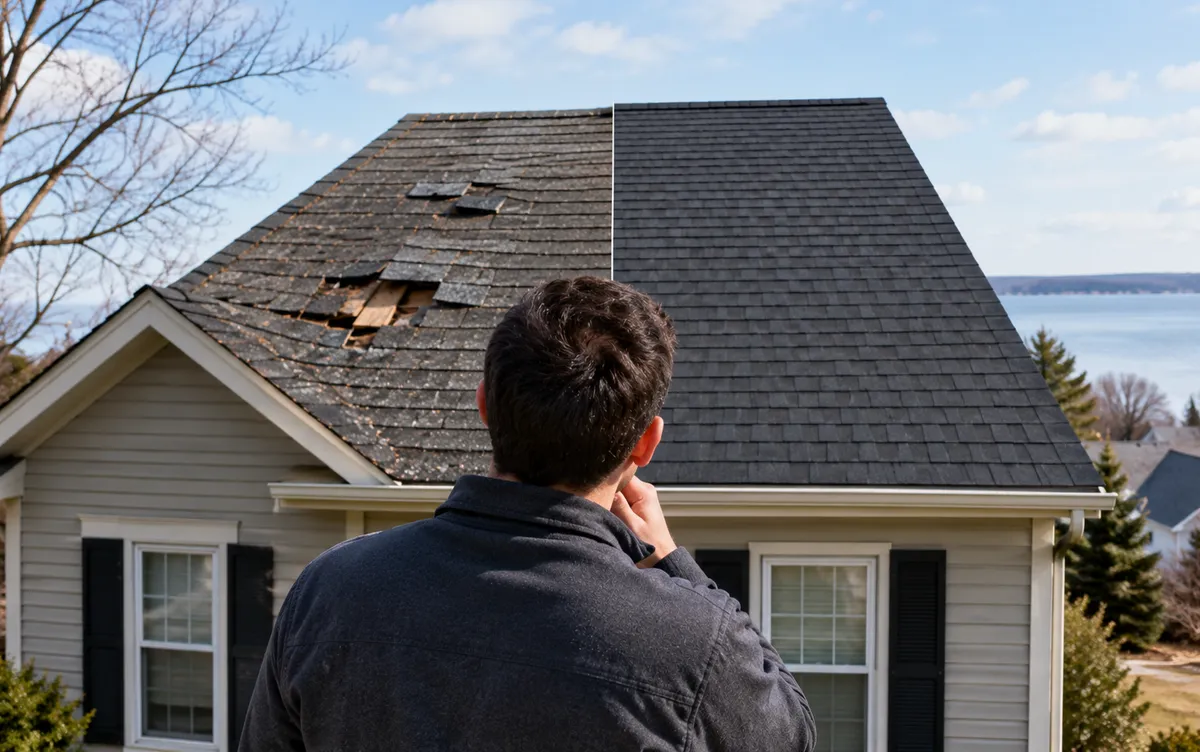
For many Michigan homeowners, the roof repair vs replacement decision is not obvious. A targeted repair can be the right call for a sound roof with a single problem. On an older roof with widespread wear, repeated repairs may only delay a replacement while costs keep adding up.
The right choice depends on your roof's age, the extent of the damage, the condition of the decking underneath, your budget, and how long you plan to stay in the home.
This guide explains when a repair usually makes sense, when replacement is often the better investment, how Michigan weather affects the decision, and which questions to ask before you approve any roofing work.
What Is the Difference Between Roof Repair vs Replacement?
A roof repair fixes a specific problem, such as missing shingles, damaged flashing or a small leak, while the rest of the roof stays in place. A roof replacement removes the existing roofing down to the deck and installs a new system, including underlayment, flashing, ventilation components and shingles.
In simple terms, a repair restores one area. A replacement resets the entire roof.
Neither option is automatically better. A repair on a young, well-installed roof can provide years of dependable service. A replacement on a roof that is near the end of its service life can prevent a cycle of leaks and patchwork.
When Roof Repair Usually Makes Sense
Repairs are often the practical choice when the problem is limited and the rest of the roof is in good condition.
The Damage Is Limited to One Area
Isolated issues are often good candidates for repair. Examples include:
- A few shingles lifted or torn off by wind
- Cracked or loose flashing around a chimney, vent or skylight
- A worn pipe boot causing a small leak
- Minor damage from a fallen branch
If the surrounding shingles are still flexible, flat and well attached, a repair may restore the roof's weather resistance without replacing the whole system.
The Roof Is Still Relatively Young
A roof that is well within its expected service life usually has plenty of value left. Replacing it because of one localized problem may not be necessary.
Keep in mind that expected lifespan depends on the material, installation quality, ventilation and weather exposure. Check the age of your roof and the manufacturer's information rather than relying on a general number.
The Decking and Structure Are Sound
If an inspection shows that the plywood or board decking is dry and solid, and there is no sagging, a repair can be a reasonable option. Problems below the shingles change the picture, which is covered in the next section.
When Roof Replacement Is Usually the Better Choice
Replacement often becomes the more sensible investment when problems are widespread or keep coming back.
The Roof Is Near the End of Its Service Life
Asphalt shingle roofs commonly last a couple of decades or more, but the exact range varies by product and conditions. When a roof is approaching the end of its expected life, new damage is often a sign of general aging rather than a one-time event.
Shingle Wear Is Widespread
Look for these signs across large sections of the roof:
- Curling, cupping or cracked shingles
- Bald spots where granules have worn away
- Large amounts of granules in gutters and downspouts
- Many shingles that are brittle or no longer lie flat
For a closer look at these warning signs, see our guide to the signs you need a new roof.
Leaks Keep Coming Back
One leak can often be repaired. Repeated leaks in different areas suggest that the roofing system as a whole is losing its ability to shed water. At that point, each repair may solve one symptom while the underlying problem continues.
The Decking Is Soft, Rotted or Sagging
Moisture that reaches the deck can weaken the wood over time. Soft spots when walking the roof, visible sagging, or water stains across the attic sheathing may indicate damage that a surface repair cannot address.
You Want to Upgrade the Roofing System
Some homeowners choose replacement to improve the roof, not just restore it. A replacement is an opportunity to upgrade to impact-resistant shingles, improve attic ventilation, or switch to a different roofing material.
Roof Repair vs Replacement at a Glance
Use this comparison as a starting point. An inspection of your actual roof should guide the final decision.
| Factor | Repair Often Fits When… | Replacement Often Fits When… |
|---|---|---|
| Roof age | Well within its expected life | Near or past its expected life |
| Extent of damage | One area or a few shingles | Large sections or the whole roof |
| Leak history | A single, identifiable leak | Repeated leaks in different areas |
| Decking condition | Dry and solid | Soft, rotted or sagging |
| Shingle condition | Flexible and lying flat | Curling, cracked or losing granules |
| Your plans | Short-term ownership or tight budget | Long-term ownership or planned upgrades |
How Michigan Weather Changes the Equation
Michigan roofs face snow loads, freeze-thaw cycles, spring storms, summer heat, and occasional hail. These conditions can turn a small weakness into a larger problem.
Water that enters a cracked shingle or a gap in the flashing can freeze, expand and widen the opening. Ice dams along the eaves can push meltwater under shingles that would shed rain without trouble. Over several seasons, a minor issue may affect a much larger area.
That does not mean every Michigan roof problem requires replacement. It does mean that timing matters:
- Address small repairs before winter so water does not have a chance to freeze in the gaps.
- Have the roof inspected after severe wind or hail, even if you do not see obvious damage from the ground.
- If the roof is already near the end of its life, consider planning a replacement during the warmer months instead of making emergency repairs in cold weather.
Practical tip: Attic insulation and ventilation affect how snow melts on your roof. If you see ice dams every winter, ask your roofer whether ventilation improvements should be part of the solution, whether you repair or replace.
Cost: Repair Now or Replace Once?
A repair almost always costs less upfront than a full replacement. The more useful question is which option provides better value over the time you expect to stay in the home.
A Common Rule of Thumb
Some contractors suggest considering replacement when repair costs approach a significant share of the cost of a new roof, or when damage affects a large portion of the roof surface. This is a planning guideline, not a fixed rule. Your roof's age and condition matter just as much as the numbers.
An Illustrative Example
Suppose a 22-year-old roof needs a repair today, and the contractor expects more repairs over the next few years as the shingles continue to age. The combined cost of several repairs, plus the risk of interior water damage, may approach the cost of replacing the roof once.
This is only an illustrative scenario, not a typical Michigan price. Ask for written estimates for both options so you can compare them directly.
For current pricing ranges, read our guide to roof replacement cost in Rochester Hills.
Costs That Are Easy to Overlook
When comparing estimates, consider:
- Interior repairs to drywall, insulation or ceilings after a leak
- Decking replacement that may only become visible once old shingles are removed
- Matching problems when new shingles do not blend with weathered ones
- Repeated service calls if the roof continues to age
Can You Put New Shingles Over the Old Roof?
A roof overlay, sometimes called a re-roof, installs new shingles over an existing layer. It can reduce tear-off and disposal costs, but it also has limitations.
An overlay does not allow the contractor to inspect or repair the decking. It adds weight to the structure, and some manufacturers have specific requirements for installing over existing shingles. Building codes also limit how many layers a roof can have.
Before considering an overlay, check with the City of Rochester Hills or your local building department, and ask your contractor how the choice may affect the shingle warranty.
What About Storm Damage and Insurance?
If hail or wind caused the damage, your homeowners insurance policy may cover some or all of the repair or replacement, depending on your coverage, deductible and the insurer's assessment.
Document the damage with photos, review your policy, and contact your insurer promptly. A professional inspection can help identify damage that is difficult to see from the ground.
Our step-by-step guide to storm and hail damage insurance claims explains the process in more detail.
Questions to Ask Your Roofing Contractor
Before you approve a repair or a replacement, ask:
- What is causing the problem, and is it limited to one area?
- How much service life does the rest of the roof appear to have?
- Did you check the decking, flashing and attic ventilation?
- What will the repair cost compared with a full replacement?
- Will repaired shingles match the existing roof in color and style?
- Does the repair or replacement affect any existing manufacturer or workmanship warranty?
- Can you provide photos of the damage and a written, itemized estimate?
A clear answer to each question makes it easier to compare options fairly and avoid paying for work you do not need.
Roof Repair vs Replacement Checklist
Replacement deserves a closer look if several of these statements apply to your home:
- The roof is near the end of its expected service life.
- Shingle wear is visible across large sections of the roof.
- You have had more than one leak in different areas.
- The inspection found soft, rotted or sagging decking.
- Repair estimates are a large share of the cost of a new roof.
- You plan to stay in the home for many years.
- You want to upgrade materials, ventilation or impact resistance.
If only one or two items apply and the roof is otherwise sound, a well-executed repair may be the better value.
Get Professional Advice on Your Roof
The roof repair vs replacement decision comes down to the condition of your entire roofing system, not just the damaged spot you can see. A young roof with an isolated problem is often a strong candidate for repair. An aging roof with widespread wear, repeated leaks or damaged decking usually benefits more from a planned replacement.
The best decision starts with an honest inspection and a clear comparison of both options in writing.
If you are weighing your options in Rochester Hills or elsewhere in Oakland County, learn more about our roof replacement services, or request a free roof inspection to get a clear recommendation and a detailed estimate for your home.
Frequently Asked Questions
How do I know if my roof needs repair or replacement?
Whether your roof needs repair or replacement depends on its age, the extent of the damage and the condition of the decking. Isolated damage on a younger roof is often repairable. Widespread shingle wear, repeated leaks or soft decking usually point toward replacement. A professional inspection gives the clearest answer.
Is it cheaper to repair or replace a roof?
Repairing a roof is almost always cheaper upfront than replacing it. However, repeated repairs on an aging roof can add up over time. Compare written estimates for both options and consider how long the repaired roof is likely to last before making a decision.
How old does a roof have to be before it should be replaced?
There is no single age at which a roof must be replaced. Asphalt shingle roofs commonly last a couple of decades or more, depending on the product, installation, ventilation and weather. Condition matters more than age alone, so have an older roof inspected before deciding.
Can a leaking roof be repaired instead of replaced?
A leaking roof can often be repaired when the leak comes from a specific source, such as damaged flashing, a worn pipe boot or a few missing shingles. If leaks keep appearing in different areas, the roofing system may be failing, and replacement may provide better long-term value.
Can I replace only part of my roof?
Partial roof replacement is sometimes possible, for example on one damaged slope. However, new shingles may not match weathered shingles, and the older sections will continue to age. Ask your contractor how a partial replacement could affect appearance, warranties and future maintenance.
Does Michigan weather make roof repairs less effective?
Michigan weather does not make roof repairs ineffective, but freeze-thaw cycles, ice dams and storms can expose weaknesses quickly. Repairs should be completed promptly and properly sealed. On an aging roof, harsh weather may cause new problems to appear around the repaired area.
Will homeowners insurance pay for a roof repair or replacement?
Homeowners insurance may pay for roof repair or replacement when damage results from a covered event, such as certain wind or hail storms. Coverage depends on your policy, deductible and the insurer's assessment. Normal wear and aging are generally not covered, so review your policy carefully.
Is it worth repairing a roof if I plan to sell my home?
Repairing a roof before selling can be worthwhile when the roof is otherwise in good condition. If the roof is near the end of its life, buyers and inspectors may notice. Compare the cost of a repair, a replacement and a possible price adjustment before deciding.
What should a roofing inspection include?
A roofing inspection should include the shingles, flashing, vents, gutters, signs of leaks, and the condition of the decking where it can be assessed. Many contractors also check the attic for moisture, ventilation and insulation problems. Ask for photos and a written summary of the findings.